
When a commercial or industrial fire breaks out, the difference between a minor localized incident and a catastrophic, business-ending loss almost always comes down to one element: immediate, reliable access to water. Early warning alarms alert occupants and compartmentalization slows a fire's spread, but water remains the primary extinguishing agent for the vast majority of structural fires. Relying solely on municipal water grids to supply that resource is a gamble modern enterprises cannot afford.
Dedicated water fire protection storage is not merely a safety precaution — it is a fundamental requirement for risk management, physical asset protection and regulatory compliance. For organizations, property developers and facility managers, investing in engineered fire protection tanks is a critical operational mandate.
Why Municipal Water Supply Is Not Enough
Many developers and facility managers assume a standard connection to the municipal main is sufficient to support on-site fire suppression. That assumption ignores the modern reality of fluctuating pressure, aging underground infrastructure, and unexpected pipeline failures.
Automated systems such as sprinklers and high-flow hydrants require specific flow rates and pressures to function. If a fire breaks out during a period of low municipal pressure — or a complete outage — sprinkler heads will fail to suppress the flames. A dedicated on-site fire water reservoir guarantees an uninterrupted supply, delivered at the correct pressure via localized fire pumps, from the moment a fire is detected until emergency responders arrive.
Understanding Fire Protection Water Tanks
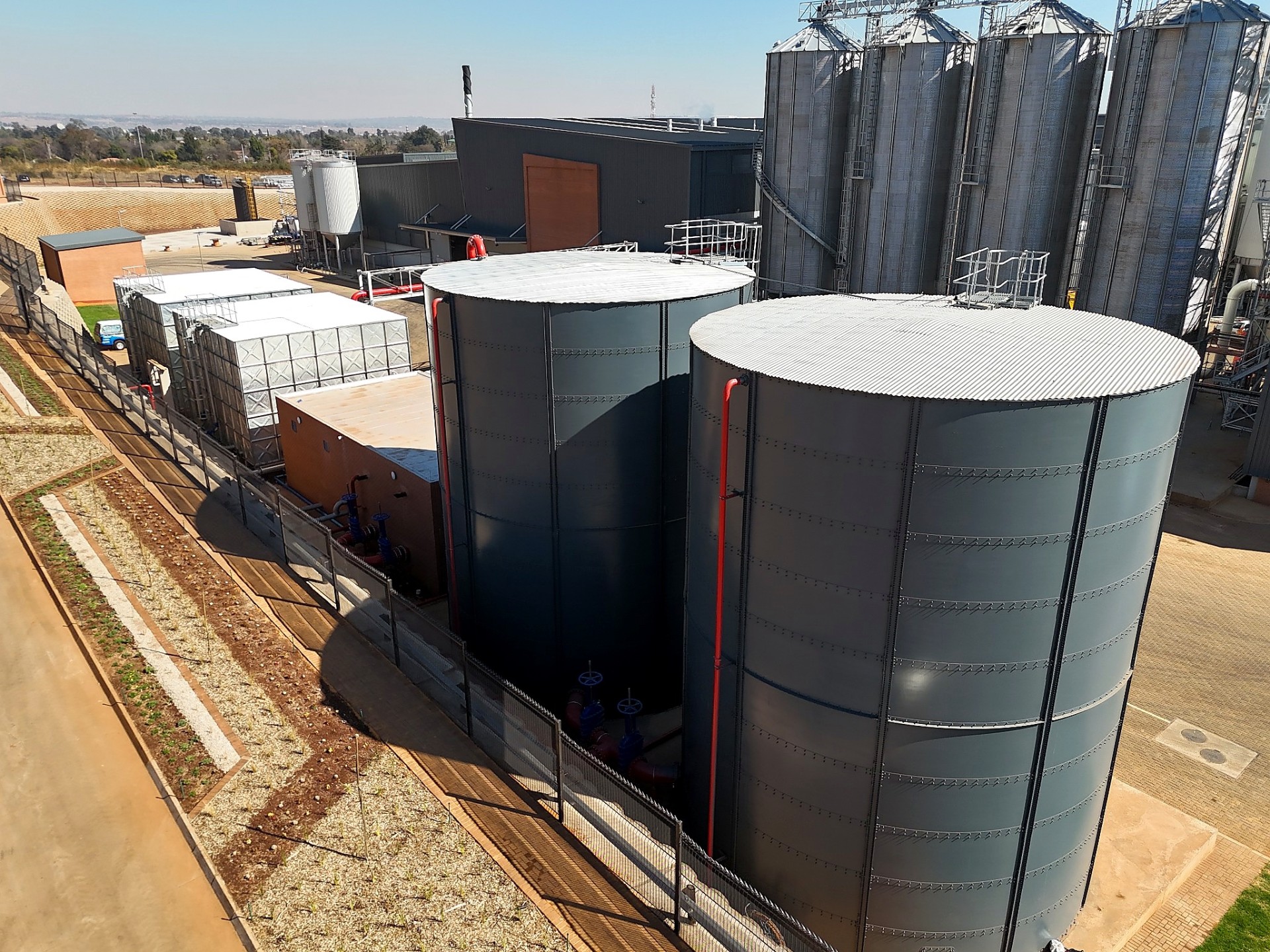
Fire water storage tanks are engineered to hold large volumes of water exclusively for fire suppression. Unlike standard potable water storage tanks used for everyday consumption, fire protection tanks are governed by rigorous industrial standards and must integrate seamlessly with regulated on-site fire pump houses. They are built from high-grade steel to ensure structural integrity under extreme conditions.
Depending on space constraints, access limitations, and volume requirements, organizations generally choose between two designs:
Cylindrical tanks — highly efficient large-scale storage, exceptionally fast to erect in open areas.
Pressed steel sectional tanks — bolted together from mass-produced panels (typically 1.22 m square), ideal for retrofitting into existing structures, basements or rooftops where space and access are at a premium.
The Unforgiving Nature of Regulatory Compliance
In fire safety, cutting corners is not an option. A non-compliant tank is a legal and physical liability. Installations must adhere to local codes. Partnering with an Automatic Sprinkler Inspection Bureau (ASIB) listed manufacturer is essential for peace of mind.
When a fire protection tank is SANS-compliant and ASIB-listed, the engineering blueprints, materials, and construction methods have been tested, vetted, and verified. It provides a guarantee that the tank will perform as engineered when an emergency occurs. Insurers also demand adherence to these codes: a commercial facility with uncertified water storage may find its claims denied following a fire, compounding physical devastation with financial ruin.
Material Innovation in Water Storage
Modern fire tanks have evolved from the rust-prone steel containers of past decades. Today's solutions use advanced materials to prevent corrosion, ensure decade-spanning longevity and minimize maintenance. Aluzinc-coated steel panels — formulated with 55% aluminum, 43.5% zinc and 1.5% silicon — provide exceptional resistance to environmental degradation and weathering.
Heavy-duty internal bladders made from high-tenacity PVC further extend tank life. By preventing stored fire water from contacting the internal steel panels, the risk of internal corrosion is virtually eliminated. The bladder can be inspected, cleaned or replaced without rebuilding the exterior steel structure.
Sizing, Capacity and Conclusion
Determining the correct size for a fire protection tank requires professional hydraulic calculations based on the facility's hazard classification. A light-hazard office building requires a very different volume to a high-hazard chemical plant, lumber yard or sprawling retail center. Engineers must account for the required flow rate (liters per minute) and flow duration (often 60 to 90 minutes or more). Engineered systems scale to meet these criteria, with capacities ranging from 1500 liters up to 3.3 million liters.
Investing in dedicated fire protection water storage from Videx Storage Tanks forms the backbone of any automated fire suppression system. It provides the guaranteed on-site volume and pressure needed to protect human life and safeguard valuable assets. When fire strikes, certainty is your greatest asset — and nothing provides more certainty than a resilient, meticulously engineered on-site water storage system.
Speak to a Videx fire-water specialist about sizing an ASIB-compliant reserve for your site.