Fire Protection
Fire Water Storage Tanks in South Africa: ASIB and SANS 10287 Explained
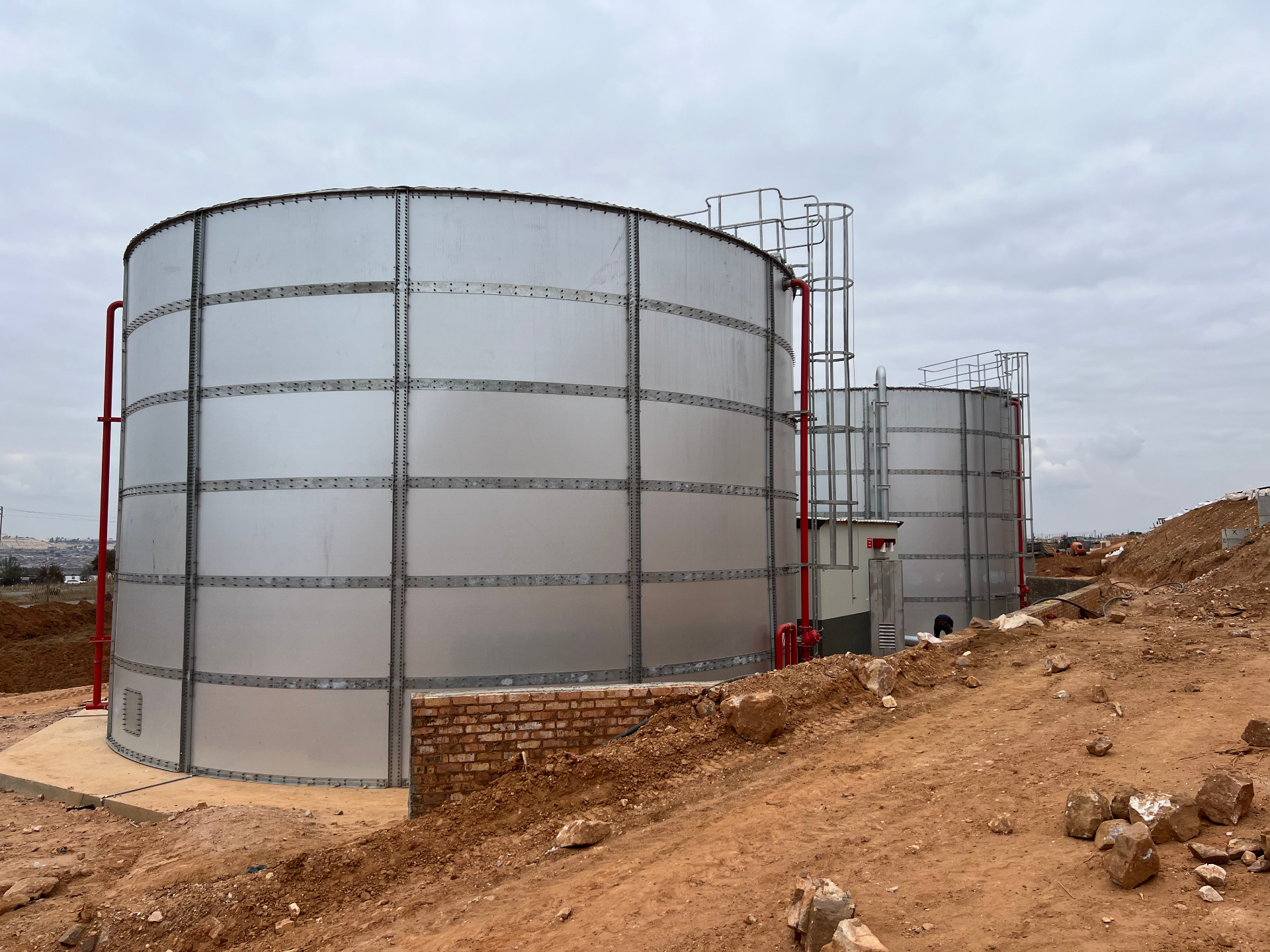
What engineers, developers and facility managers need to know before specifying a fire water storage tank for a sprinkler system in South Africa.
A sprinkler system is only as reliable as the water behind it. When a fire starts, the sprinkler pumps draw from stored water, not from a municipal main that may be under-pressured, interrupted or shared with the rest of the neighbourhood. That is why most commercial, retail and industrial sprinkler installations in South Africa depend on a dedicated fire water storage tank, and why the tank is inspected as part of the system.
This guide explains how fire water storage is specified in South Africa, how SANS 10287 and the ASIB rules relate to each other, and which tank features matter when you are choosing a supplier.
Key takeaways
- Sprinkler installations in South Africa are designed to SANS 10287 or, more commonly, to the rules published by the Automatic Sprinkler Inspection Bureau (ASIB).
- The required volume is set by the fire engineer from the hazard classification, the design flow and the required duration of supply. The tank supplier's job is to deliver that volume as usable, effective capacity.
- Effective capacity is less than the tank's nominal capacity. Outlet position, vortex inhibitors and freeboard all affect how much water the pumps can actually use.
- Features such as split compartments, correct suction arrangements and level monitoring help a fire tank pass inspection and stay in service during maintenance.
Why sprinkler systems need dedicated water storage
A sprinkler system has to deliver a known flow of water, at a known pressure, for a known period. Very few municipal connections can guarantee that on their own. Supply interruptions, low pressure at peak times and maintenance shutdowns are all common, and a fire does not wait for the mains to recover.
A fire water storage tank removes that uncertainty. Water is held on site, reserved for firefighting, and delivered to the sprinklers by a dedicated pump set. Insurers, inspectors and fire engineers can then verify the water supply as a fixed, measurable part of the installation rather than relying on conditions outside the property.
SANS 10287 and the ASIB rules: how they fit together
SANS 10287 (previously published as SABS 0287) is the South African national standard for automatic sprinkler installations. It sets out general principles for the design, installation and maintenance of sprinkler systems in buildings and industrial plants, including hazard classification and the provision of water supplies.
ASIB, the Automatic Sprinkler Inspection Bureau, is a South African inspection body established in the 1970s by the insurance industry. ASIB publishes its own rule books, which have been revised over several editions to reflect international practice adapted to South African conditions. ASIB also inspects sprinkler installations and maintains a list of recognised installers.
In practice, many commercial and industrial projects, particularly those where insurers are involved, are designed and inspected to the ASIB rules. A system is normally evaluated against the edition of the rules it was designed to, so it is important that the tank specification matches the edition your fire engineer is working from.
Videx Storage Tanks is ASIB listed as a fire water tank supplier. Your fire engineer or sprinkler contractor remains responsible for the overall system design and its compliance.
How fire water storage is sized
The tank size is not chosen by the tank supplier. It follows from the sprinkler design, and the main inputs are:
- Hazard classification. The occupancy and what is stored in the building determine the hazard class, which drives the design density and the area the sprinklers must cover.
- Design flow. The flow rate the pumps must deliver to the most demanding area of the system.
- Duration. How long that flow must be sustained. The required duration depends on the hazard classification and the rules being applied.
- Inflow. Some rules allow a reduced stored volume where a reliable, automatic refill supply can be demonstrated. Others require the full volume to be stored.
The fire engineer combines these inputs into a required volume of usable water. From that point, the tank has to be designed so that the full required volume can actually be drawn by the pumps.
Effective capacity versus nominal capacity
The nominal capacity of a tank is its total internal volume. The effective capacity is the volume the pumps can draw before air enters the suction pipe. The difference comes from:
- Water below the suction outlet, which the pumps cannot reach.
- Vortex formation. As the water level drops, a vortex can form above the suction and draw in air. A vortex inhibitor fitted to the suction outlet reduces this effect and lets the pumps use more of the stored water.
- Freeboard between the overflow level and the roof, which is never filled.
Fire specifications therefore often state both a nominal and an effective volume. When comparing quotations, make sure every supplier is quoting the effective capacity your engineer requires, not just a nominal tank size.
Tank features that matter for fire protection
Dedicated or combined storage
A fire tank can be dedicated purely to firefighting, or it can be combined with domestic or process storage. In a combined tank, the domestic draw-off is positioned so that the fire reserve below it can never be used for anything else. Combined storage can save space and cost, but the arrangement must be agreed with your fire engineer and accepted by the inspecting authority.
Split or two-compartment tanks
Splitting the tank into two compartments, each with its own suction and inlet, means one half can be drained for cleaning or repair while the other half keeps the sprinkler system supplied. For many sites this is the difference between a planned maintenance shutdown and a period with no fire protection at all.
Suction, inlet and overflow arrangement
Suction connections, vortex inhibitors, inlet valves and overflow sizing all need to match the pump design and the rules being applied. These details are where tanks most often fail inspection, so they should be confirmed on the drawings before fabrication.
Level monitoring and access
Level indication, low-level alarms, access ladders and manholes make it possible to inspect, test and maintain the tank safely. They should be part of the specification from the start, not added afterwards.
Corrosion protection
A fire tank may hold the same water for long periods and is expected to last for decades. Videx sectional tanks use hot-dip galvanised steel panels to SANS 121, and Videx round tanks use Aluzinc AZ150 coated steel with a food-grade PVC liner. Both are designed to SANS 10329. If you are deciding between the two, our sectional steel water tanks and round steel water tanks pages set out the options.
Fire water storage projects delivered by Videx
Videx has supplied and installed fire water storage for shopping centres, retail stores and commercial sites across South Africa. Examples include:
- Turffontein: 923 kL of fire water storage for Fireco.
- Leroy Merlin Cornubia: 631 kL of fire water storage.
- Southgate Mall: a fire water tank installed on an operating shopping centre.
- Leratong City Mall: a complete fire water storage system.
- President Hyper Rustenburg and VOX Fire Heidelberg: fire water storage for commercial and industrial sites.
Each project starts from the fire engineer's required volume and works back to a tank layout, suction arrangement and foundation that fit the site.
Questions to ask your fire tank supplier
- Which edition of the ASIB rules, or which standard, is the tank designed to?
- Is the quoted figure the effective capacity, and how was it calculated?
- Is a vortex inhibitor included, and where is the suction outlet positioned?
- Can the tank be split into two compartments so it stays in service during maintenance?
- What corrosion protection is used, and what is its expected service life?
- Who provides the foundation design, and is it included in the price?
- Are level indication, alarms, ladders and manholes included?
Frequently asked questions
Do I need a fire water tank for a sprinkler system?
In most commercial and industrial buildings, yes. Unless the municipal supply can be shown to meet the required flow, pressure and duration on its own, stored water and a pump set are needed. Your fire engineer will confirm this from the sprinkler design.
Who decides how big the fire tank must be?
The fire engineer or sprinkler designer, based on the hazard classification, design flow and required duration under the applicable rules. The tank supplier then designs the tank to deliver that volume as effective capacity.
What is the difference between SANS 10287 and the ASIB rules?
SANS 10287 is the South African national standard for automatic sprinkler installations. The ASIB rules are rule books published by the Automatic Sprinkler Inspection Bureau, based on international practice adapted to local conditions. Many insured commercial and industrial sites are designed and inspected to the ASIB rules.
Can fire water and domestic water be stored in the same tank?
Yes, if the tank is arranged so the fire reserve can never be drawn down by domestic use. The arrangement must be approved by your fire engineer and accepted by the inspecting authority.
Why does a fire tank need a vortex inhibitor?
As the water level falls, a vortex can form above the suction outlet and draw air into the pumps. A vortex inhibitor reduces this, so more of the stored water can be used before the pumps lose suction.
This article provides general guidance only. Fire protection systems must be designed by a competent fire engineer or sprinkler designer and comply with the standards and rules applicable to your project.
About this article
Written by the engineering team at Videx Storage Tanks, a South African manufacturer of steel water storage tanks based in Wadeville, Gauteng, with a branch in Bellville, Cape Town. Videx has more than 40 years of experience and more than 500 completed projects, is ISO 9001:2015 certified and is ASIB listed.
Planning a fire water storage project? Speak to a Videx engineer or read more about our fire protection water storage tanks and commercial water storage.